Course 02 · Lesson 1 of 8 · Matching a tree to a place
Start with the place you can grow
Before you choose a tree, read the place you can offer it: its sun and shelter, winter lows and summer highs, water, access, and the time you can give. Learn what hardiness zones do and do not tell you, and turn a place into a list of what any tree there will need.
The question
Which trees could thrive in the place you can actually offer?
By the end of this lesson, you will be able to:
- Describe a growing place by its light, shelter, local climate, water and runoff, access, and the time you can give it.
- Explain what a hardiness zone tells you, and why a tree whose roots spend the winter in a pot needs hardiness to spare.
- Turn a place's constraints into selection criteria and record them in a site profile before choosing a tree.
About 16 minutes to read and explore
The owner of the west balcony, an instructional example this course returns to, is walking through a garden center in May. A trident maple stops them: a thick little trunk and fresh three-lobed leaves, still tinged red. It would look lovely by the balcony door.
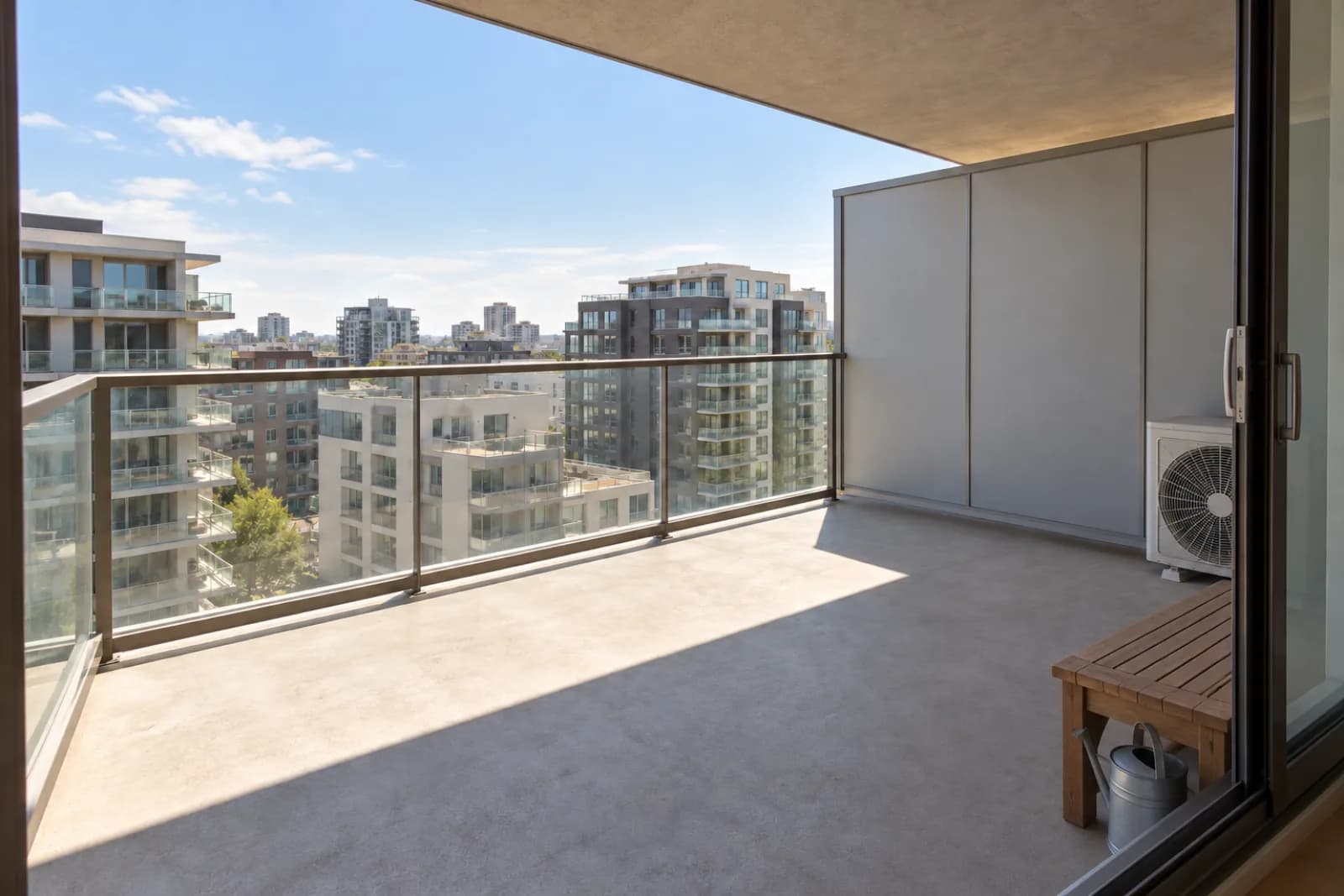
Before the tree, think about what the balcony would ask of it. On July afternoons, sun beats onto its concrete floor from early afternoon until sunset, the air reaches 30 to 33 °C (86 to 91 °F), and wind blows in at the open end. On the coldest night of a typical winter, the pot would sit four floors up in air at about −15 to −17 °C (0 to 5 °F), with no ground around its roots. There is no tap outside, and every August the owner is away for two weeks.
None of that is printed on the maple's label, and none of it would change if the owner fell for a different tree instead. The maple might do well there, with some planning. A ficus could not survive a January night out there at all. Which trees could thrive on this balcony depends first on the balcony.
Why the place comes first
You can choose among hundreds of kinds of trees, but you have only a few places to grow them, and you can change those only a little, with a bench, a screen, a drip tray, or a grow light. You cannot turn a west balcony to face east, move your city into a milder climate, or add a tap where the building has none. It is far easier to find a tree that suits a place than to make a place suit a tree.
The place matters this much because a bonsai's needs are a full-sized tree's needs (Course 01, Lesson 1): strong light for its leaves (Course 01, Lesson 6), water and air for its roots in a small pot that dries quickly in sun and wind (Course 01, Lesson 8), and, for a temperateDescribes regions with distinct warm and cold seasons, and the trees adapted to them, which typically need a cool winter rest. Trident maples and the junipers commonly grown as bonsai are temperate trees and need seasonal outdoor conditions rather than a warm room all year.Open the glossary tree adapted to warm summers and cold winters, its seasons, including a cold winter rest (Course 01, Lesson 13). A tree in the wrong place often declines slowly, and it can look fine for weeks or months before it shows.
Predict first
The shelf gives the maple shelter from wind and frost, and it is easy to water there. But it lacks two things a trident maple needs. The first is light: three steps back from a window, its leaves get only a small fraction of outdoor daylight, even though the room looks bright to you (Course 01, Lesson 6). The second is winter: a warm room never gives it the weeks of cool weather that meet its chilling requirementThe amount of time a temperate tree's buds must spend in cool weather before endodormancy ends and normal bud break can follow. Temperatures a few degrees above freezing count most, and hard cold counts for less. Requirements vary widely among trees; without enough chilling, bud break is often delayed, uneven, and weak.Open the glossary and end its winter rest, so the next spring its buds break late and weakly (Course 01, Lesson 13). For weeks it will probably look fine, so a spot that looks right proves nothing.
What to look at in a growing place
A growing place is any spot where a tree could live: a balcony, a yard, a roof, a doorstep, or a window. This course follows three, all instructional examples in one temperate Northern Hemisphere city:
- The west balcony. A fourth-floor apartment balcony facing west, 4 m (13 ft) wide and 1.8 m (6 ft) deep, with a concrete floor and a glass railing. The balcony above roofs the back half.
- The bright window. An apartment with no outdoor space, but a large south-facing living-room window with a sill 25 cm (10 in) deep and a radiator below it.
- The small backyard. A fenced yard on the south side of a house, with a paved patio along the warm house wall, a lawn, a neighbor's large maple beyond the west fence, and an unheated garage.
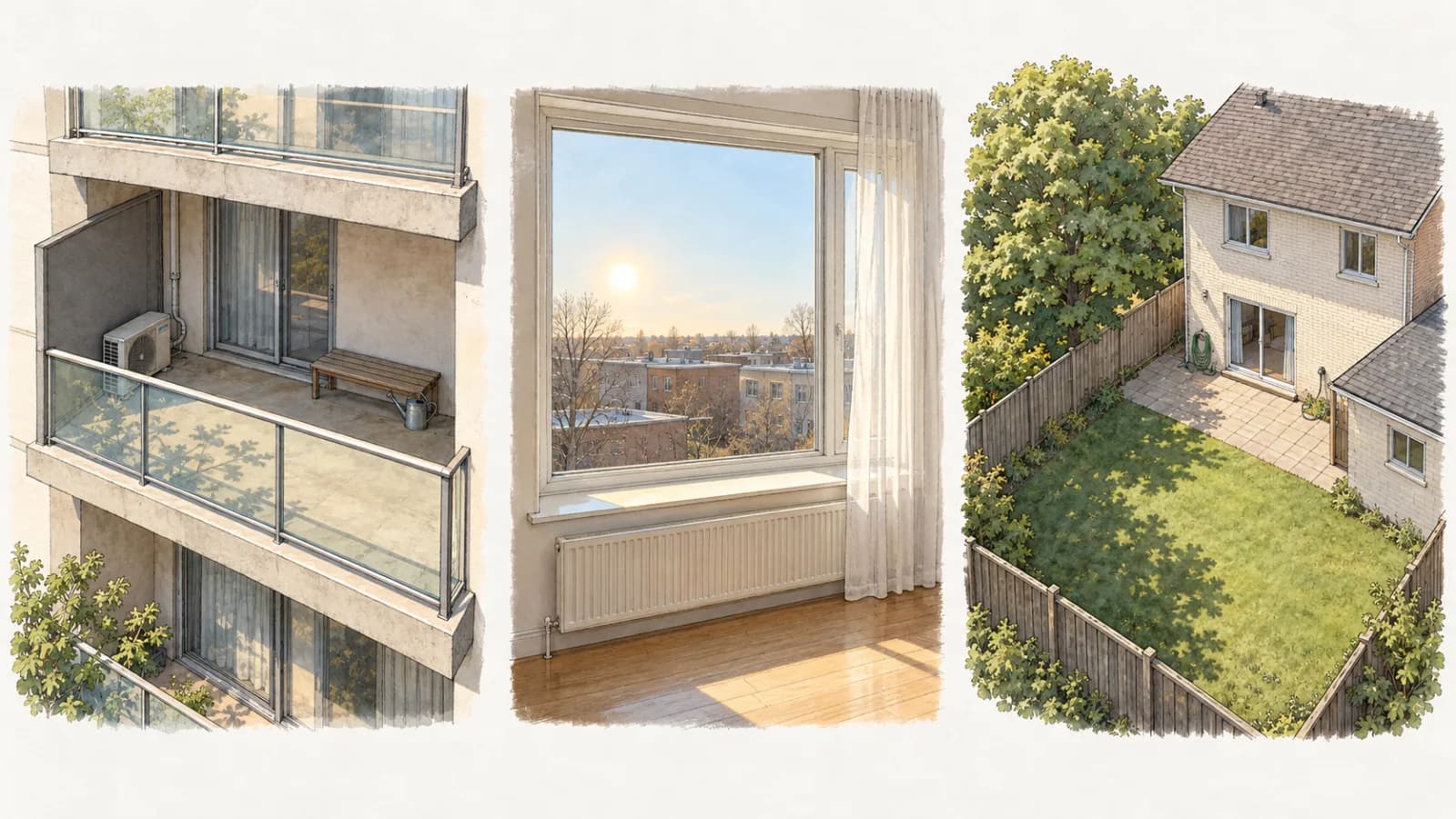
Look at the same things in each: light, shelter, water, access, time, and the local climate. The west balcony is the worked example.
Light through the day and the year
Light is the first thing a tree needs from a place, and the easiest to misjudge. What matters is direct sun at the height where the tree would stand: how many hours, at what time of day, and in which seasons. In the Northern Hemisphere, where these examples are, south-facing places get the most sun, and the sun is higher and up longer in summer than in winter; in the Southern Hemisphere, swap north and south.
The west balcony gets direct sun from early afternoon until sunset: about six hours in midsummer. That is good light for an outdoor tree, but it comes in the hottest part of the day, so it heats pots and dries leaves more than the same hours of gentle morning sun would. In winter the low sun reaches farther under the overhang but sets early, giving about three hours.
At the bright window, direct sun reaches the sill on clear winter days from late morning to mid-afternoon; in summer the high sun barely gets inside. Even so, a window that looks bright passes far less light than open sky, and the light falls off steeply a few steps back into the room (Course 01, Lesson 6). Lesson 4 shows how to map sun and measure light; for now, note when direct sun reaches the spot, and for how long.
Shelter, heat, and cold air
Walls, overhangs, fences, and corners make differences a tree can feel, even a few steps apart. Wind and heat raise the evaporative demandHow strongly the surrounding air draws water vapor from leaves, rising with sun, heat, dry air, and wind. High evaporative demand can make a tree lose water faster than reduced or damaged roots can replace it.Open the glossary on leaves, the pull that draws water vapor out of them (Course 01, Lesson 8), and strong wind can tip a pot over.
On the west balcony, the open south end is windy, while a solid privacy screen shelters the north end. An air-conditioner condenser on the floor in the north corner blows hot air whenever it runs in summer. In the small backyard, the house's south wall and the patio along it soak up sun and give it back as heat on summer afternoons, and the southeast corner, the lowest part of the yard, collects cold air on still, clear nights. Mark spots like these in your own place; Lesson 5 explores them.
Water and where it goes
A tree in a pot depends on you for water much of the year. Every thorough watering should wet the whole root zone and end with water running from the drainage holes: roots need air as well as water, and a pot that cannot drain stays waterlogged (Course 01, Lesson 7). So ask two questions: how far away is the water, and where will the runoff go?
The west balcony has no outdoor tap, so every can is carried from the kitchen, and drips land on the neighbors' balcony below; pots against the back wall, under the overhang, get little rain even in wet weather. At the bright window, the kitchen tap is a few steps away, but runoff from the sill would reach the radiator and the floor. The small backyard is the easiest: a hose tap on the house wall, and runoff that soaks into the lawn. Carrying every drop also limits how many pots one person can keep (Lesson 7 covers drainage and a workable setup).
Access, rules, and safety
A place is useful only if you can reach it in every season. A roof hatch locked in winter, a garden plot you visit only on weekends, or a front step buried in snow all fail just when a tree may need checking, and a resting tree still needs its moisture checked through the winter (Course 01, Lesson 13).
Buildings and landlords often have rules too: nothing on or hanging from railings, limits on weight, no dripping onto balconies below, fire escapes kept clear. Ask before you plan around a spot. Safety matters as well: a pot on a fourth-floor railing can be knocked off by wind or an elbow onto whoever is below, so on the west balcony, pots stay on the floor or on stable stands inside the railing.
Your time, and who can help
A healthy bonsai does not need hours of work, but it does need someone to look at it often. In the growing season, that usually means a few minutes of checking on most days: is the root zone starting to dry, and how do the leaves look? In summer heat a small pot can dry out in a single day, so checks become daily, sometimes twice daily. Winter asks for less, but not nothing. Course 03, Watering and Daily Observation, will turn this into a routine. So record your time honestly, including your travel and who could water while you are away, once shown how:
- The west balcony's owner travels for work about one week a month and is away two weeks every August, in the hottest part of the year. A friend can water if shown how.
- The bright window's owner works from home and rarely travels.
- The small backyard's owners are away two weeks every July, usually the hottest month. A neighbor can water.
Read the local climate
Every place sits inside a climate, which sets limits no bench or screen can change. For a tree in a pot, these facts matter most:
- Winter lows: how cold the coldest nights get, and for how long. They decide which trees can stay outdoors and how much protection their pots need.
- Summer highs: how hot afternoons get, and how often heat waves come. Heat speeds water loss and can overheat roots in a small pot.
- Frost dates: when frost usually ends in spring and starts again in autumn.
- Rain: how much falls, and when. Rain helps, but it rarely waters a pot reliably.
- Wind: where strong winds usually come from, and in which seasons.
The example city has warm to hot, humid summers, with July afternoons often 30 to 33 °C (86 to 91 °F) and occasional heat waves near 36 °C (97 °F). Its winters are cold, with January nights often −5 to −10 °C (14 to 23 °F). Rain falls in every season.
A frost dateThe average date of the last frost in spring or the first frost in autumn at a place, worked out from many years of weather records. It is an average, not a promise: some years bring frost later in spring or earlier in autumn, so check the forecast before trusting tender trees or new growth to the night air.Open the glossary is the average date of the last frost in spring or the first frost in autumn, worked out from many years of weather records. Here the last spring frost usually comes in late April, and the first autumn frost in mid-October. The frost-free months between them are the growing seasonThe part of the year warm enough for plants to grow, often counted as the frost-free days between the last spring frost and the first autumn frost. Its length shapes how long trees grow each year, and it is the most time a frost-tender tree could spend outdoors.Open the glossary, about five and a half months in this city: the part of the year when trees do most of their growing, and the longest a frost-tender tree could spend outdoors. A ficus, which many growers keep above about 10 °C (50 °F), gets less. Frost dates are averages, not promises. Some springs bring a frost a week or two after the usual date, and a low corner can frost on a night when the rest of the yard stays clear.
Practice check · not scored
What a hardiness zone tells you
Plant labels and catalogs often give a hardiness zoneAn area on a map defined by how cold its winters get, usually measured as the average of the coldest temperature reached each winter. In the USDA system each zone spans 10 °F (about 5.6 °C), split into halves a and b, and plant labels name the zones where a plant survives winter in the ground. Roots in a pot are more exposed, so a tree in a pot needs hardiness to spare.Open the glossary. In the United States, the Department of Agriculture (USDA) maps the country by the average annual extreme minimum temperature: the coldest temperature reached each winter, averaged over many years (1991 to 2020 for the current map). Each zone covers a band of 10 °F (about 5.6 °C), split into halves marked a and b. The example city's coldest night in a typical winter is about −15 to −17 °C (0 to 5 °F), which places it in zone 7a.
A label that says a tree is hardinessA plant's ability to survive the conditions of a place, most often its cold hardiness: the coldest winter temperatures it can survive once it has acclimated to cold. Ratings such as hardiness zones describe plants growing in the ground; roots in a pot are more exposed, so a potted tree needs more protection than its rating suggests.Open the glossary to zone 5 means it usually survives the winter lows of zone 5, which are colder than zone 7a's, when it is planted in the ground. In the ground, the nursery juniper from Course 01 is hardy in roughly zones 4 to 9, and the trident maple to roughly zone 5. The ficus, treated as a tropicalDescribes warm regions near the equator without a cold winter, and the trees adapted to them. Tropical trees such as ficus have no chilling requirement and can be damaged or killed by frost; their growth slows when light or warmth drops.Open the glossary tree for placement, is damaged or killed by frost, so in this climate it can be outdoors only in the warm months.
Other systems are similar. In the United Kingdom, the Royal Horticultural Society rates plants rather than places, from H1, for plants that need a heated greenhouse, to H7, for plants hardy below about −20 °C (−4 °F). Many countries publish their own zone maps, and some, such as Canada's, combine several climate measures. Either way, you compare the tree's cold tolerance with your place's winter lows.
A zone tells you one thing well: how cold a typical winter's coldest night gets. It tells you nothing about summer heat, humidity, rain, or wind, about how long cold spells last, or about a sudden hard freeze that arrives before trees have built their cold acclimationThe gradual process, triggered by shortening days and falling temperatures, in which a tree's tissues become able to survive freezing. A tree moved suddenly from a warm room into frost has not acclimated and can be badly damaged. It is not the same as shoots hardening, or turning woody, though the two often happen around the same time.Open the glossary in autumn. The warm end of a range such as “zones 4 to 9” often hints at where summers get too hot or winters too mild for that tree, but the map itself measures only winter cold. And it describes plants growing in the ground.
Roots in a pot need a margin
In the ground, a tree's roots sit in a great mass of soil that changes temperature slowly. On the coldest night, the soil around the roots stays much milder than the air, especially under snow. In a pot standing above ground, cold reaches the roots from every side, including from below, and over a long cold spell the whole root ball can get nearly as cold as the air.
The roots are also the tenderest part. Roots are generally less cold-hardy than the buds and twigs above them (Course 01, Lesson 13), and many are killed by temperatures the branches survive easily. So a zone rating overstates how hardy a tree in a pot is.
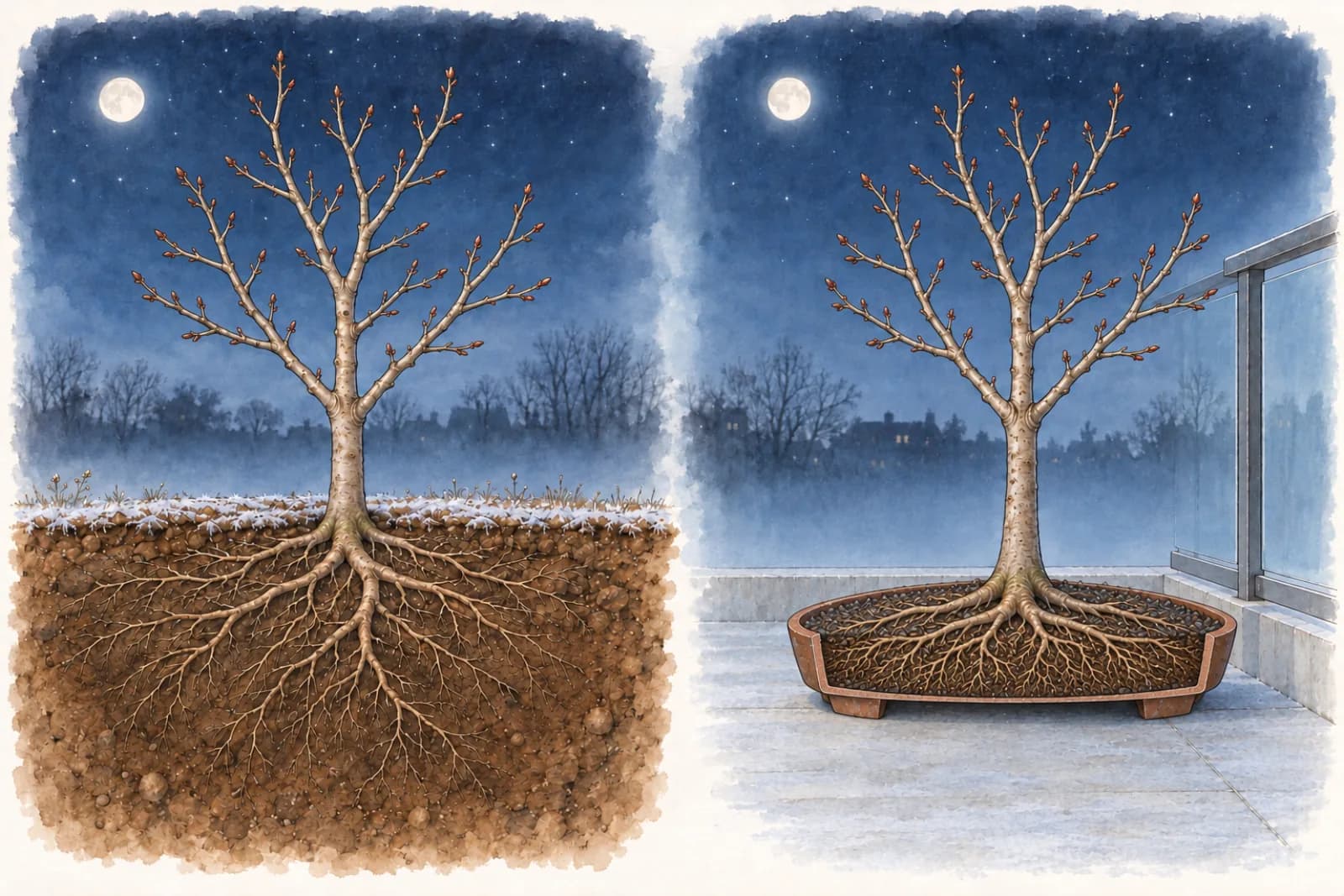
A common rule of thumb for plants that spend the winter outdoors in containers is to choose ones rated at least one or two zones colder than your own. Even then, bonsai growers protect their pots in hard freezes, often in an unheated shelter that stays cold, so the tree still gets its winter rest (Course 06, Seasonal Care and Timing). In zone 7a, the juniper has about three zones to spare and the trident maple about two, and both still need their roots protected on the coldest nights.
Practice check · not scored
Where to find local climate data
You do not need to guess any of this.
- A national weather service publishes climate normals for its stations: average monthly highs and lows, extremes, and often frost dates.
- Extension services and botanic gardens publish frost dates, zone maps, and plants that do well locally. In the United States, each state's cooperative extension service does this, and the USDA Plant Hardiness Zone Map can be searched by ZIP code; elsewhere, agricultural or horticultural advisory services do the same job.
- Local bonsai clubs and nurseries know which trees come through the winter in pots where you live and how growers protect them. Their experience comes closest to your conditions.
A weather station measures air in an open, standard spot. A balcony four floors up, a sunny wall, or a low corner can be warmer or colder, so your own observations belong in the record too; Lesson 5 shows how to check with a thermometer at pot height.
Go deeper · optional, not assessedMaps beyond the coldest night
The USDA map shows winter cold alone; other maps try to capture more. The American Horticultural Society's Plant Heat Zone Map divides the United States into 12 zones by the average number of days each year above 30 °C (86 °F), a rough guide to heat stress, though far fewer plant labels give a heat zone than a hardiness zone. Canada's official zones add the frost-free period, rainfall, summer highs, snow cover, and wind to winter lows. The more a map combines, the closer it comes to what a plant lives through, but none describes your balcony. That is what local experience and your own records are for.
Turn each constraint into a criterion
Each fact about a place is a constraint: something any tree there will have to live with. A selection criterion turns that fact into a requirement for the tree and its setup. “A front step with direct sun only in the morning, about four hours” becomes “trees that grow well with a few hours of morning sun.” “The building allows nothing on the railings” becomes “pots on the floor or on stands inside the railing.”
Some criteria describe the tree: how much light it needs, how cold-hardy it is, whether it needs a winter rest. Others describe the setup: a bench, a tray, a shelter for the coldest nights, a helper for the holidays. Both come before any tree is named, because while you are still choosing, a criterion a tree fails is a reason to choose a different tree; once the tree is home, it becomes a problem to solve.
In From a place to a shopping list, start with West balcony. Read each card under Observations and choose what it leads to under It leads to. Every choice explains itself, and you can change an answer at any time. Each right match adds a line to This place asks for… under the picture. When the list is complete, press Next: Bright window, and then do the Small backyard. Your answers for each place are kept while you switch.
Exercise
From a place to a shopping list
Growing place · Instructional example
The west balcony
A fourth-floor apartment balcony facing west, 4 m (13 ft) wide and 1.8 m (6 ft) deep, with a concrete floor and a glass railing. The balcony above roofs the back half.
This place asks for…
0 of 6
- Sun: not matched yet
- Winter cold: not matched yet
- Summer heat: not matched yet
- Wind and shelter: not matched yet
- Water and runoff: not matched yet
- Time away: not matched yet
Observations
0 of 6 matched
Sun
Direct sun from early afternoon until sunset: about six hours in midsummer, in the hottest part of the day. In winter the low sun sets early, giving about three hours.
Winter cold
The coldest night of a typical winter is about −15 to −17 °C (0 to 5 °F), which places the city in USDA hardiness zone 7a. Pots on the balcony stand in the open air, with no soil around them.
Summer heat
July afternoons often reach 30 to 33 °C (86 to 91 °F). An air-conditioner condenser on the floor in the north corner blows hot air in summer.
Wind and shelter
The open south end of the balcony is windy. The north end has a solid privacy screen. The railing is glass panels with a metal top rail, four floors up.
Water and runoff
There is no outdoor tap, so water is carried from the kitchen. Water that drips off the balcony lands on the neighbors' balcony below. Pots against the back wall, under the overhang, get little rain.
Time away
The owner travels for work about one week a month and is away two weeks every August. A friend can water if shown how.
Text description
Three instructional-example growing places in one temperate Northern Hemisphere city, with warm to hot summers and cold winters (USDA zone 7a). Each place has six observations. For each one, you choose which of three criteria it leads to. A criterion says what a tree and its setup must cope with in that place: light, winter cold, summer heat, wind, water, and the time someone can give. Each choice explains why it does or does not follow.
Every right match adds a line to a list headed “This place asks for…”. Answers for each place are kept when you switch places, and a finished list ends with a note on what limits that place most. Each picture has a numbered marker for each card, and empty pots with dashed outlines stand where a tree could go, because the tree comes later.
The west balcony. A fourth-floor apartment balcony facing west, 4 m (13 ft) wide and 1.8 m (6 ft) deep, with a concrete floor and a glass railing. The balcony above roofs the back half. The picture looks at the balcony from outside, four floors up: the glass railing with its metal top rail in front, the balcony above roofing the back half, the solid privacy screen at the north end on the left with the condenser blowing hot air in that corner, a packed suitcase by the door, a watering can, a low bench against the back wall, wind blowing in at the open south end on the right, and water dripping off the front edge.
- Sun: Direct sun from early afternoon until sunset: about six hours in midsummer, in the hottest part of the day. In winter the low sun sets early, giving about three hours.
- Winter cold: The coldest night of a typical winter is about −15 to −17 °C (0 to 5 °F), which places the city in USDA hardiness zone 7a. Pots on the balcony stand in the open air, with no soil around them.
- Summer heat: July afternoons often reach 30 to 33 °C (86 to 91 °F). An air-conditioner condenser on the floor in the north corner blows hot air in summer.
- Wind and shelter: The open south end of the balcony is windy. The north end has a solid privacy screen. The railing is glass panels with a metal top rail, four floors up.
- Water and runoff: There is no outdoor tap, so water is carried from the kitchen. Water that drips off the balcony lands on the neighbors' balcony below. Pots against the back wall, under the overhang, get little rain.
- Time away: The owner travels for work about one week a month and is away two weeks every August. A friend can water if shown how.
The bright window. An apartment with no outdoor space. A large south-facing living-room window has a sill 25 cm (10 in) deep, with a radiator below it. The picture shows the window from inside the room on a clear winter day: low sun in a wide sky above low buildings, a sheer curtain drawn to one side, the deep sill, warm air rising from the radiator below with a drip running off the sill onto it, a watering can on the floor, a thermostat on the wall, and a desk with a laptop.
- Light: On clear winter days, direct sun lands on the sill from late morning to mid-afternoon. In summer the high sun barely reaches inside, so the sill gets bright indirect light most of the day. Low buildings across the street block little sky.
- Space: The sill is 25 cm (10 in) deep. A sheer curtain hangs in front of the glass, and the owner can open it.
- Temperature: The room stays 20 to 22 °C (68 to 72 °F) all year. With no outdoor space, a tree here never gets a cold winter.
- Heating and dry air: A radiator sits right below the sill. While the heating runs in winter, the air in the room is dry.
- Water and runoff: The kitchen tap is a few steps away. Water that drains from a pot on the sill would run onto the radiator and the floor.
- Time available: The owner works from home and rarely travels.
The small backyard. A house with a fenced backyard on its south side, behind a 1.8 m (6 ft) wooden fence. A paved patio runs along the house wall, and lawn fills the rest. The picture shows the yard from above, looking north at the sunny south wall of the house: the paved patio along the wall with the hose tap and a packed suitcase by the back door, the lawn with a bench, the neighbor's maple beyond the west fence shading the western third, the garage at the northeast corner, and cold air pooling in the low southeast corner.
- Sun and shade: The yard gets sun most of the day. A neighbor's large deciduous maple beyond the west fence shades the western third on summer afternoons; in winter its bare branches cast only thin shade.
- Winter cold: The coldest night of a typical winter is about −15 to −17 °C (0 to 5 °F), zone 7a. An unheated detached garage with a window is available.
- Low corner: The southeast corner is the lowest part of the yard. On still, clear nights, cold air settles there. The last spring frost usually comes in late April.
- Heat by the house: The house's south wall faces the yard and holds heat, with a paved patio along it. July afternoons often reach 30 to 33 °C (86 to 91 °F).
- Water: A hose tap is on the house wall. Rain falls in every season, and water that drains from pots soaks into the lawn.
- Time away: The owners are away two weeks every July, usually the hottest month. A neighbor can water.
The three choices for each observation are on its card.
One climate gave three different lists. On the balcony, the tightest limits were the hot afternoon sun, roots exposed to winter cold, and watering while the owner travels. At the window, they were light and the missing winter cold, while time was plentiful. The backyard offered the most: sun and shade, an easy tap, and a garage for winter shelter, with the hot paving, the low corner, and the July trip as its limits.
The tempting wrong answers failed for a few recurring reasons. A zone label is not enough for roots in a pot. “Tropical” and “indoor” trees answer neither summer heat nor time away; they only move the problem. No tree in a pot does without water, and a pot with no drainage hole traps water instead of solving the runoff. A south window is still far dimmer than outdoors, and an “indoor bonsai” label does not make a temperate tree an indoor one.
And none of the finished lists named a tree. That comes next. Lesson 2 covers what to find out about a tree before you choose it, and Lesson 3 whether it belongs indoors or outdoors, so that a list like this can become a short list of trees.
Practice check · not scored
A site profile for the west balcony
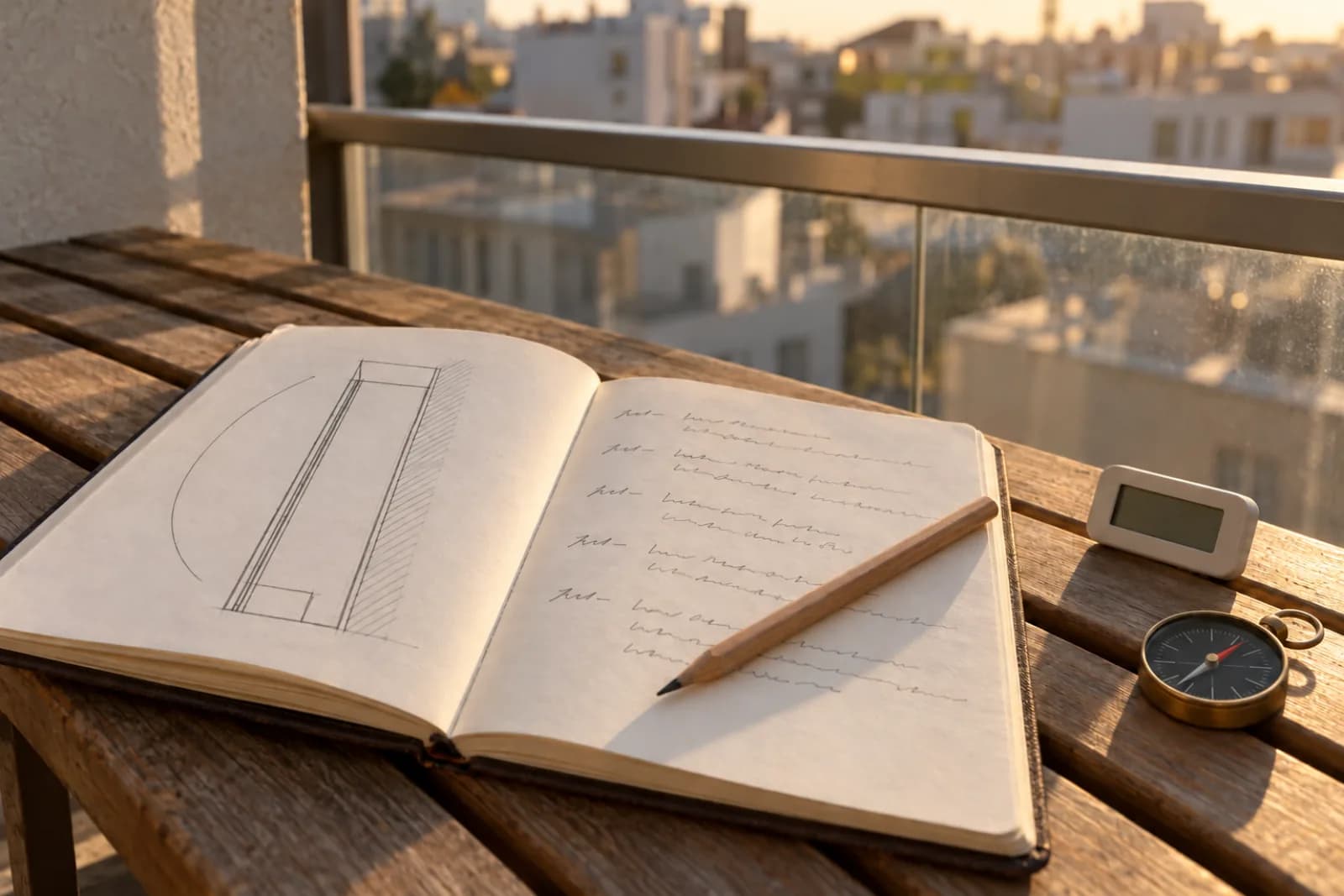
A site profileA short written record of a growing place: its sun through the day and the seasons, shelter, winter lows and summer highs, water and runoff, access, and the time its keeper can give. Each fact is turned into a criterion for choosing a tree and its setup, and the record is updated as seasons and circumstances change.Open the glossary is a short written record of a growing place and the criteria it leads to, on a page or two. It is worth writing even for a single place, because it keeps the facts in front of you when a tree in a shop is tugging at you.
Here is the west balcony's, written by its owner in early summer after a week of observations:
| Topic | Observed | Leads to |
|---|---|---|
| Light | Direct sun from early afternoon until sunset, about six hours now; about three in winter | Trees that want full sun and cope with hot afternoons |
| Winter | Zone 7a; coldest nights about −15 to −17 °C (0 to 5 °F); pots stand in open air | Trees hardy with room to spare, and winter shelter for pots |
| Summer | July afternoons 30 to 33 °C (86 to 91 °F); the condenser blows hot air in the north corner | Heat-tolerant trees, kept well away from the condenser |
| Wind | The open south end is windy; a privacy screen shelters the north end | Stable pots on the floor, tender leaves away from the windy end |
| Water | No outdoor tap; drips land on the balcony below; the back wall gets little rain | Trays that catch runoff, and only as many pots as can be watered by hand |
| Access and rules | Reachable every day of the year; building rules on railings and weight not yet checked | Pots on the floor or on stands inside the railing; ask the building manager |
| Time and help | Away about one week a month and two weeks every August; a friend can water if shown how | Holiday watering by a friend who has been shown, and no very small pots |
The profile also notes what is still unknown: how cold the balcony floor really gets in January, where the pots could shelter in a hard freeze (a question for the local bonsai club), and whether the friend can come every couple of days in August. It sets a date to look again in midwinter, when the low sun reaches farther in.
It already works as a filter. A ficus fails the winter line unless the owner can also offer a bright indoor place for most of the year. The nursery juniper and the trident maple both pass, with plans for heat, wind, and the August trip; the maple, whose leaves can scorch in strong afternoon sun and wind, needs those plans most. Lessons 2 and 3 do this sorting properly.
Profile the place before you shop
The bonsai decision
Write a site profile before you choose a tree
Starting point
For each place you could use, spend a week noting:
- Light: when direct sun reaches the spot at pot height in the morning, at midday, and in the evening, and for how long.
- Shelter: the windy, hot, and cold spots, and anything that blows hot air or drips.
- Climate: your hardiness zone, frost dates, typical winter lows, and summer highs, from local sources.
- Water: how far it is to a tap, and where runoff would go.
- Access: whether you can reach the spot in every season, and any building or landlord rules.
- Time: your ordinary week, your travel, and who could help.
Turn each note into a criterion for the tree or its setup, list what you still need to find out, and set a date to look again. Then shop with the profile in hand.
This assumes
- You are choosing a tree you do not have yet. If one has already arrived, keep it safe while you profile its place, and find out what it is first (Lesson 2).
- Climate figures describe a typical year. Single winters and summers can be harsher.
- A week of notes shows one season. The profile is a starting record, not a final verdict.
Change course if
- The season turns. The balcony's six summer hours of sun drop to about three in winter, and the backyard's western third brightens once the maple drops its leaves. Recheck the light near midsummer and midwinter (Lesson 4).
- The place surprises you. A frost in the low corner after the usual date, a pot blown over at the windy end, or a heat wave that dries a pot by noon goes into the profile, and the criterion it touches gets stricter.
- You move, or the place changes. A new home, a new building across the street, or a new rule from the landlord means a new profile.
- Your time or help changes. More travel or a helper who moves away changes what you can keep. Fewer, larger pots are easier to leave in someone else's care.
Back to the question
Which trees could thrive in the place you can actually offer?
The ones that meet the criteria your place sets: its direct sun through the day and the seasons, its winter lows (with hardiness to spare for roots in a pot) and summer highs, its shelter, its water and runoff, its access, and the time you and your helpers can give. Find those criteria first, from your own observations and local climate data, and write them in a site profile. One climate gave the balcony, the window, and the yard three different lists; the next lessons turn a list like that into a short list of trees.
Key takeaways
- Read the place before you choose the tree. You can choose among many trees, but you can change a place only a little.
- A growing place has its light through the day and the year, its shelter, its water and runoff, its access and rules, and the time you and your helpers can give, all inside a local climate.
- A hardiness zone maps a place's average coldest winter night, and zone ratings describe plants growing in the ground. Roots in a pot are more exposed, so choose trees with hardiness to spare and plan winter protection; zones say nothing about summer heat.
- Frost dates are averages, so frost can still come later in spring or earlier in autumn.
- Turn each constraint into a criterion for the tree and its setup, record them in a site profile, and update it as the seasons and your circumstances change.
Optional · not required for completion
Profile one place
Choose one place you could use. For a week, check it in the morning, at midday, and in the evening: is direct sun on the spot at the height a pot would stand? Note where the wind comes from, walk the route from the nearest tap and see where runoff would go, and look up your hardiness zone, your frost dates, and your usual July high (January, south of the equator). Then write one criterion for each fact. Which of the three example places is yours most like, and what is its tightest limit?
No tree? None is needed; this is the step before a tree. If you have no growing place yet, profile a spot you know well, such as a friend's balcony or a window at work.